REVIEW · CORDOBA
Cordoba: 2.5-Hour Guided Jewish Quarter and Alcazar Tour
Book on GetYourGuide →Operated by CÓRDOBA A PIE · Bookable on GetYourGuide
Cordoba’s layers of faith hit fast. This 2.5-hour guided tour threads the city’s Jewish Quarter (Judería) into the Alcázar complex with skip-the-line access and a guide who stays in one language. I like how the route turns history into street-level storytelling, not museum lectures. I also love that entrance fees are handled for you, so you spend your time looking up at architecture instead of figuring out tickets.
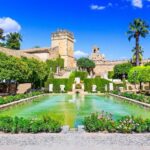
One thing to keep in mind: right now, the Alcázar visit is affected by restoration. You’ll still get to see the Alcázar Gardens and the Arab Baths of the Caliphal Alcázar, but you won’t get full access to everything as usual.
You should also bring sturdy shoes. The walk involves stairs, and this tour is not recommended if you have mobility limits or back problems. With that said, if you enjoy old neighborhoods and clear explanations, this is a strong value way to understand Córdoba’s past in a short time.
In This Review
- Key highlights you shouldn’t miss
- Meeting at Puerta del Perdón: start where Córdoba’s story is loudest
- From Calleja de la Hoguera into the Judería
- Plaza Cardenal Salazar and Algafequi, the eye-doctor
- Capilla Mudejar de San Bartolomé: an architecture clue with a secret history
- The souk stop: shopping with context, not time-killer browsing
- The medieval synagogue you can still visit
- Alcázar of the Catholic Monarchs: what’s open during restoration works
- Guides and language: one language, clear pacing
- Price and value: what you’re really paying for at $34
- Who this tour fits best
- Should you book this Córdoba Jewish Quarter and Alcázar tour?
- FAQ
- How long is the Córdoba Jewish Quarter and Alcázar guided tour?
- How much does the tour cost?
- Where do I meet the guide?
- What is included in the price?
- Which parts of the Alcázar can I visit right now?
- What language options are available?
- Is the tour suitable for people with mobility issues?
Key highlights you shouldn’t miss
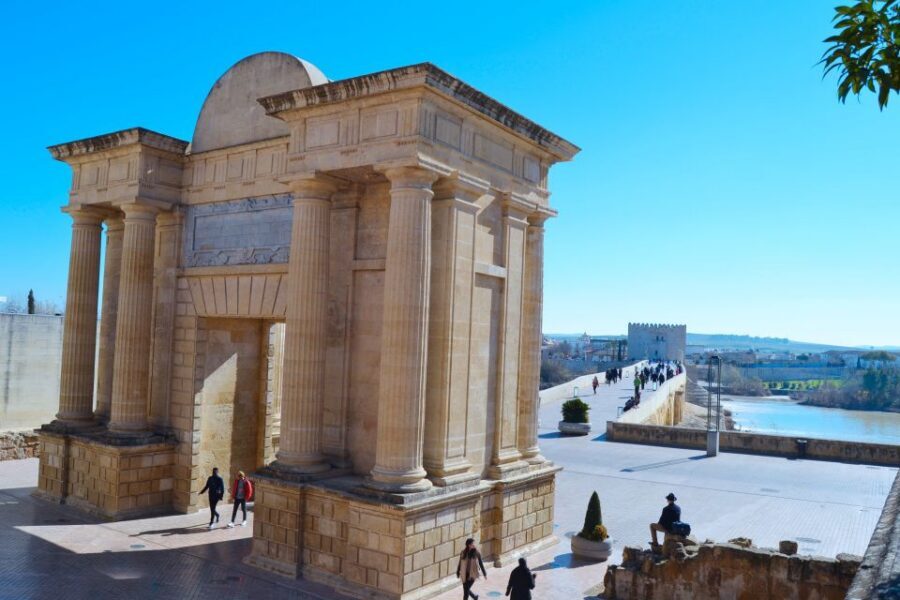
- Puerta del Perdón meeting spot at the Mezquita-Catedral area, with an orange umbrella for easy pickup
- Calleja de la Hoguera: a historic mosque stretch and a look at Córdoba’s legendary 10th-century mosque count
- Algafequi in Plaza Cardenal Salazar: early eye-care history tied to a site that became a university
- Capilla Mudejar de San Bartolomé: a chapel with a conversion story you’ll actually understand
- A 14th-century synagogue: one of the few Jewish monuments to survive major upheaval
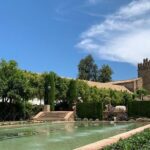
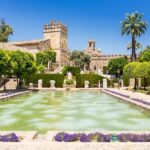
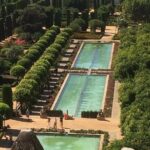
- Alcázar Gardens and Arab Baths: the part that’s open now during restoration, plus no tower visits
Meeting at Puerta del Perdón: start where Córdoba’s story is loudest
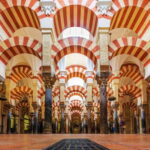
Your tour begins at Puerta del Perdón by the Mezquita-Catedral (Calle Cardenal Herrero, 1). Look for the orange umbrella. Starting right at this landmark helps you get your bearings fast—you’re in the zone where Córdoba’s different eras still press right up against each other.
Plan on walking with comfortable shoes. You’re not doing a casual stroll on flat ground; the route mixes old streets and steps. If you’re traveling with kids, double-check mobility needs first, because the tour is explicitly not advised for limited mobility and includes many stairs.
More Córdoba Alcázar & Mosque-Cathedral at the Alcázar & Seville

From Calleja de la Hoguera into the Judería
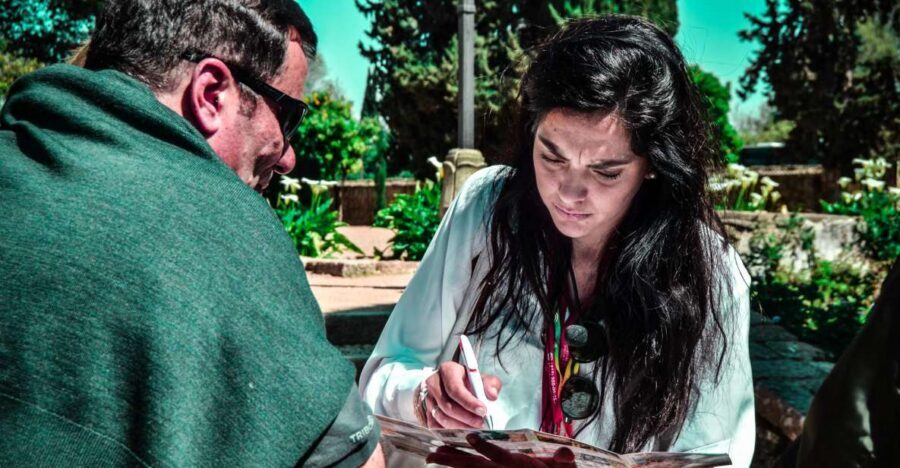
After you meet your guide, you head down Calleja de la Hoguera, a narrow lane that traces back to Arabic-era Córdoba. You’ll pass a historic mosque site, and your guide will frame an important detail: historians believe Córdoba once hosted over a thousand mosques in the 10th century.
That number sounds almost too big to process, but walking here helps. You can see why the old city could support that kind of religious footprint, with dense neighborhoods and walkable connections between places of worship, work, and learning. This is one of those parts where the guide’s pacing matters. You’ll want to slow down, listen, and look at the street context, not just the headline fact.
Plaza Cardenal Salazar and Algafequi, the eye-doctor
Next stop: Plaza Cardenal Salazar. This is where the tour shifts from broad “conquest and culture” themes into specific names you can remember later. You’ll see a statue of Algafequi, noted as the first doctor to operate on eyes in Europe in the 12th century.
Right in the same area, there’s an older hospital building from the 18th century that now functions as a university. That contrast is the point: Córdoba keeps reusing space, and the people who lived here kept adapting old structures to new needs. It’s a small stop, but it gives you a human anchor for all the big historical talk.
Capilla Mudejar de San Bartolomé: an architecture clue with a secret history
From the plaza, you walk to Capilla Mudejar de San Bartolomé, described as an old Christian chapel with arabesque-style features built by a Jewish convert. This is one of the most interesting buildings on the tour because the story isn’t obvious just from looking.
The guide explains what makes the chapel’s history complicated—how religious identity and building style overlapped in ways that weren’t always straightforward. I like this part because it helps you read the city: Córdoba isn’t just a collection of monuments; it’s a place where people had to navigate pressure, conversion, and community life.
The souk stop: shopping with context, not time-killer browsing
Before the synagogue, the tour includes time near the souk, a craft market with local products typical of Córdoba. This works well if you’ve been walking for hours and want a change of pace without losing the theme of the day.
You’re not there just to buy souvenirs. You’re there to see how Córdoba’s past connects to its present crafts and daily commerce. If you want to pick something up, this is the moment—otherwise, you can treat it as a short sensory break and then get back to the heavier history.
More Jewish Quarter & Santa Cruz at the Alcázar & Seville
The medieval synagogue you can still visit
Then comes one of the tour’s biggest draws: a medieval synagogue from the 14th century. Your guide will point out that it’s one of the few Jewish monuments that survived a tumultuous history.
Seeing a surviving place like this does something different than reading about it later. The building becomes evidence. It’s harder to reduce that history to a timeline when you’re standing in a structure that endured. If you care about Jewish heritage in Spain beyond the most famous general stories, this stop is the payoff.
Alcázar of the Catholic Monarchs: what’s open during restoration works
The tour ends at the Alcázar of the Catholic Monarchs, but there’s an important current limitation. Due to restoration works, the full guided Alcázar experience can’t run as usual.
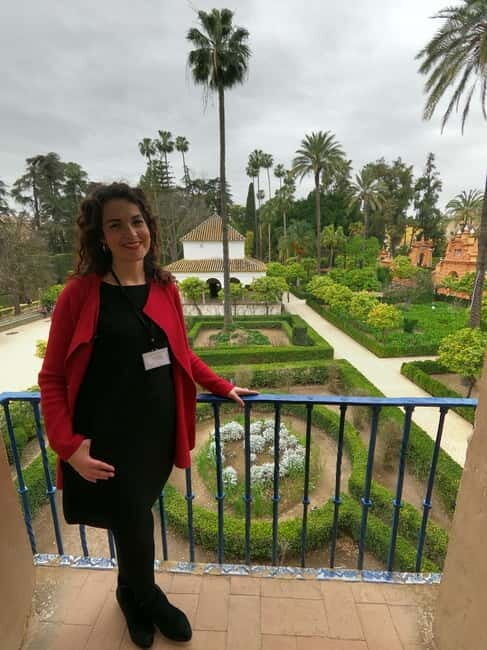
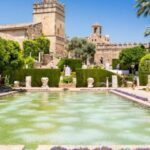
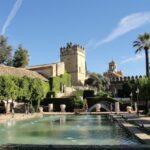
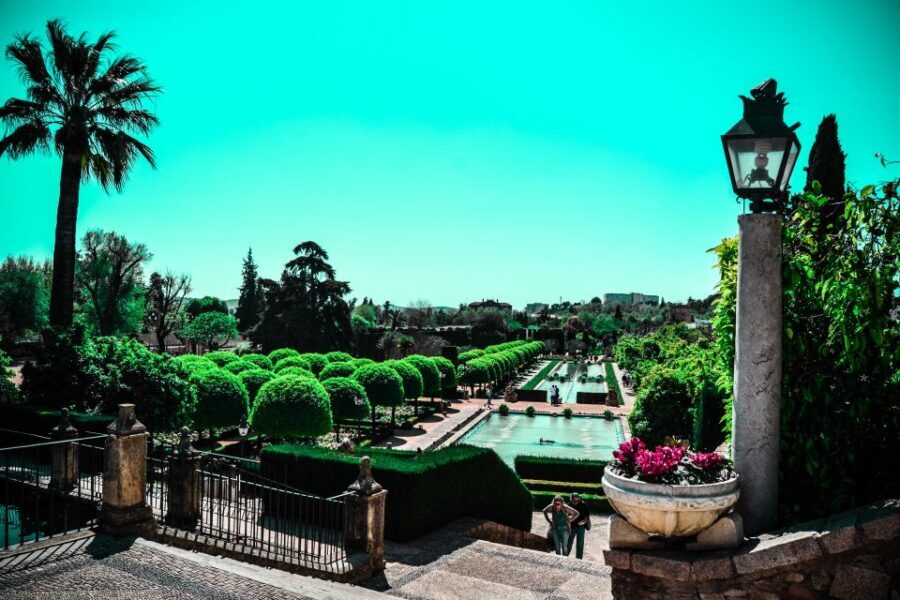
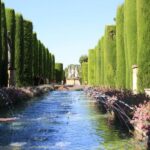
Instead, you’ll only be able to access the areas currently open to the public within the larger monumental complex: the Alcázar Gardens and the Arab Baths of the Caliphal Alcázar. Your guide will still talk about the Catholic Monarchs and the role the Alcázar played in Córdoba’s past, but you’ll be exploring the portion that’s accessible right now.
Also note what’s not included: towers are not visited. On many visits, towers are the “big view” element, so if that’s your main goal, you may want to plan a separate stop later.
Even with the partial access, I think this ending still makes sense. The gardens and baths are major pieces of the complex, and focusing on what’s actually open keeps your time practical. Don’t treat this as a disappointment either—tours like this work best when you trust the plan for the day you’re actually walking.
Guides and language: one language, clear pacing
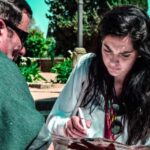
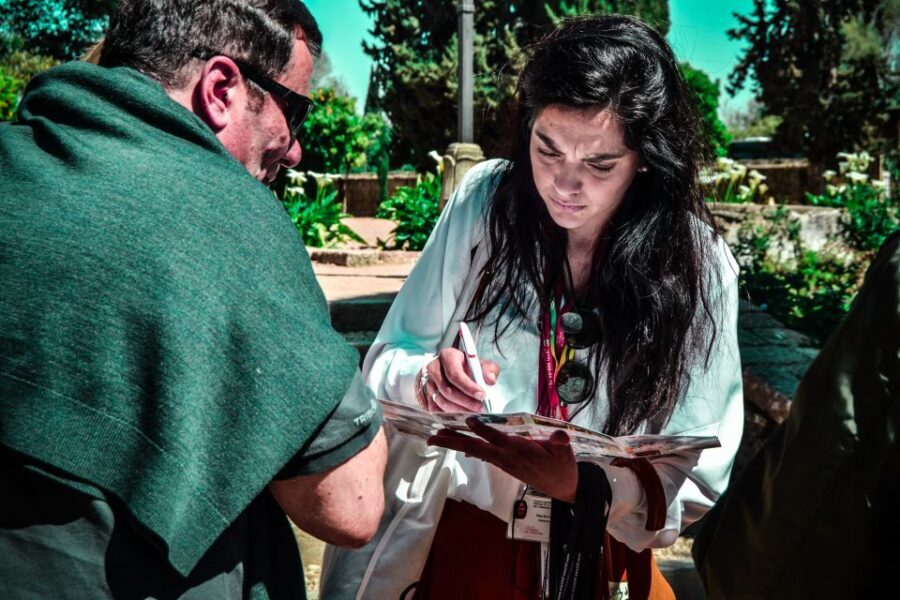
This tour runs with a live guide in English or Spanish. One detail I really appreciate: the guide doesn’t switch back and forth between languages. That keeps the explanation consistent and avoids the awkward pauses that can happen in mixed-language groups.
From what I’ve seen, guide quality matters here because you’re moving through several different “story types” in a short span—mosque-era references, medical history, chapel conversions, a synagogue, and then Alcázar architecture. When the pacing is good, the tour feels like one connected argument about Córdoba’s layered identity.
You may also hear standout guidance from specific guides mentioned for their clear explanations and ability to link history with stories for different ages. Another guide example tied to a weather disruption extended the Judería part when the Alcázar gardens weren’t accessible. That tells you the group leadership is meant to keep the experience meaningful even when the plan changes.
Price and value: what you’re really paying for at $34
At $34 per person for about 2.5 hours, this is priced like a focused “big sights, guided context” experience. The value isn’t only the sites; it’s the combination of guided interpretation, entrance fees included, and skip-the-ticket-line access.
For a short trip, that matters. You’re not just seeing buildings from the sidewalk; you’re getting guided time inside key locations. And since the tour includes multiple major stops—Jewish Quarter sites plus the Alcázar complex—it’s a cost-effective way to pack in serious content without spending your evening hopping between locations on your own.
The only value question to consider is the current Alcázar limitation. If you were hoping for tower access or full monument coverage, the open portion may feel shorter than you expected. Still, if you’re flexible about what’s available today, the structure holds up.
Who this tour fits best
This is a strong match if you:
- want the Jewish Quarter (Judería) explained in a walk-through format
- care about architecture and how buildings reflect changing identities
- appreciate a single-language guide for smoother listening
- want an efficient pairing of Judería + Alcázar gardens and Arab Baths
It’s not a good fit if you:
- have limited mobility or back problems (stairs are involved)
- need a stroller: baby trolleys must be left at the entrance
- specifically want tower visits (they aren’t part of this tour)
Should you book this Córdoba Jewish Quarter and Alcázar tour?
If you like guided walks that explain what you’re looking at, I’d book it—especially if you’re visiting Córdoba for a limited number of hours. The meeting point near the Mezquita-Catedral area is convenient, and the route covers the kinds of sites that are hard to connect without a guide.
Book it with one expectation set: the Alcázar part you’ll see is limited to what’s currently open, mainly the Alcázar Gardens and Arab Baths of the Caliphal Alcázar. If that works for you, the tour should deliver exactly what you want—clear stories, major heritage stops, and a well-timed end at the Alcázar complex.
If you hate stairs, or towers are your priority, you’ll likely prefer a different option. Otherwise, this is a smart way to learn Córdoba’s layered past without turning your day into a checklist.
FAQ
How long is the Córdoba Jewish Quarter and Alcázar guided tour?
The tour lasts 2.5 hours.
How much does the tour cost?
It’s $34 per person.
Where do I meet the guide?
Meet at Puerta del Perdón, Mezquita Catedral, Calle Cardenal Herrero, 1, and look for the orange umbrella.
What is included in the price?
The tour includes a guided tour and entrance fees. Food and hotel pickup are not included.
Which parts of the Alcázar can I visit right now?
Because of restoration works, access is limited to the Alcázar Gardens and the Arab Baths of the Caliphal Alcázar. Towers are not part of the tour.
What language options are available?
The live guide is available in English and Spanish.
Is the tour suitable for people with mobility issues?
No. The tour is not recommended for people with limited mobility or back problems, since there are many stairs.