REVIEW · SEVILLE
Alcázar and Jewish Quarter Guided Walking Tour in Seville
Book on Viator →Operated by Pancho Tours · Bookable on Viator
Seville changes fast when you walk it. This 3-hour route links the Real Alcázar with the winding streets of Santa Cruz, so you get palace grandeur and neighborhood grit in one go—without losing half your day to ticket lines. You’ll hear how Moorish, Gothic, and Renaissance layers all ended up inside the same royal complex, then shift to cobblestones, orange-scented plazas, and the human stories of the old Jewish quarter.
I especially like the mix of guided context and free wandering. The Alcázar time is long enough to actually see courtyards and gardens (not just pose in front of a gate), and the Santa Cruz portion gives you room to slow down around places like Plaza del Triunfo and Calle Vida. I also like that the tour runs in small-ish groups (maximum 30), with whisper devices included for groups of 8 or more, so it’s easier to follow the guide’s pace.
One possible drawback: there are reports of guides not showing up and trouble reaching the operator, so it pays to arrive early and have your phone charged in case anything feels off.
In This Review
- Key things that make this tour worth your time
- Meeting at Plaza del Triunfo: how your route starts and why it matters
- Skip-the-line at the Alcázar: what you actually get (and what costs extra)
- Alcázar highlights you should look for: chambers, courtyards, gardens
- From palace to Santa Cruz: Plaza del Triunfo, water passages, and the Giralda view
- Santa Cruz walking: orange plazas, cobbles, and the Jewish-quarter story
- Short stops that add context: Venerables and Archivo General de Indias
- Walking reality check: pace, group size, and hearing the guide
- Price and value: is $68 a fair deal for Alcázar + Santa Cruz?
- Who should book this tour, and who should skip it?
- Should you book this guided Alcázar and Santa Cruz walk?
- FAQ
- How long is the Alcázar and Santa Cruz walking tour?
- Where does the tour start?
- Where does the tour end?
- Is the Alcázar ticket included in the tour price?
- About how much walking is involved?
- What group size should I expect?
- Are whisper devices included?
- Is this experience refundable if I cancel?
Key things that make this tour worth your time
- Skip-the-line Alcázar entry setup: you trade a long wait for a guided, pre-planned route into a busy UNESCO site.
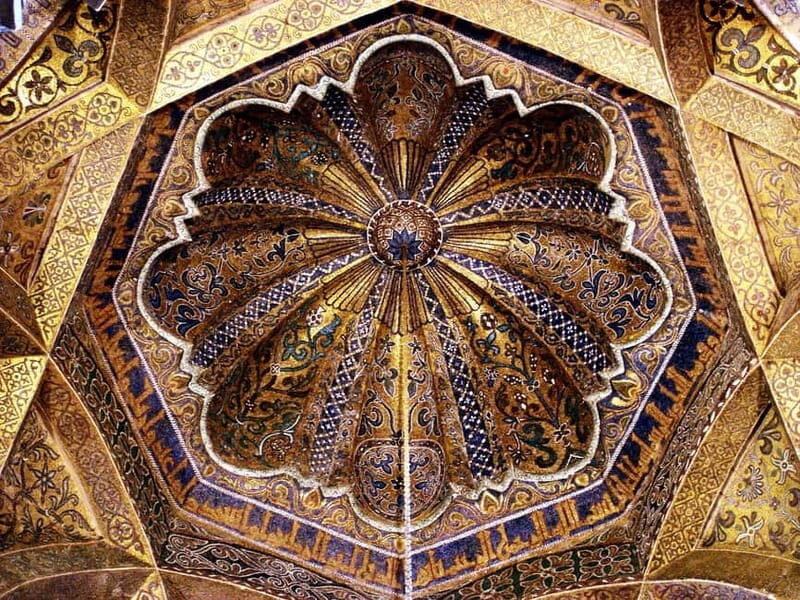
- Architecture storyline in real space: Moorish, Gothic, and Renaissance features aren’t just named—they’re pointed out as you walk from chambers to courtyards.
- Santa Cruz walking that feels local: cobbled lanes, whitewashed houses, and plazas with orange-scented air are the main event here.
- Focused highlights you can’t easily find alone: stop for places such as Plaza de Dona Elvira and Calle Vida, plus references like the Balcon de Rosina.
- Short context stops beyond the big two: quick peeks at Hospital de los Venerables and the Archivo General de Indias can help tie Seville together.
Meeting at Plaza del Triunfo: how your route starts and why it matters
Most days, your tour begins at Plaza del Triunfo in Seville’s Casco Antiguo. It’s one of those squares that works as a natural hub: you get easy orientation fast, and it’s tied to major sights like the Cathedral area and the Alcázar access zone. In the tour plan, Plaza del Triunfo is also where you’ll hear about local names such as Plaza de la Inmaculada, and see references related to the path toward Santa Cruz.
You can book different departure times, and the order can shift depending on your start. That matters because the Alcázar is the highest-demand stop. If your day is hot or your schedule is tight, you’ll generally benefit from choosing a departure that gets you into the palace sooner rather than later.
Also, the tour length is about 3 hours, with roughly 5 km of walking. That’s not a light stroll, but it’s not a marathon either. You’ll want decent shoes and water, and you’ll feel the walking more in summer when the stone streets and alleyways trap heat.
Finally, your group stays capped (maximum 30). That’s large enough to meet other people, but small enough that a guide can still steer you to key corners instead of just throwing you into the crowd.
More Jewish Quarter & Santa Cruz at the Alcázar & Seville

Skip-the-line at the Alcázar: what you actually get (and what costs extra)
The Real Alcázar of Seville is Europe’s oldest still-active royal palace, and that status changes how you experience it. It’s not just a museum. It’s a living royal site, used by the Spanish royal family when they’re in Seville. The tour’s main promise is that you’ll use a skip-the-line setup (but the Alcázar entrance ticket itself is at your own expense).
This is the part where your “value math” matters. Yes, the tour is $68 for the guided walk and included elements, but you’re still paying for monument entry separately for the Alcázar. What you’re buying is the time advantage and the guidance once you’re inside. If you’re visiting during peak season, saving even 30–60 minutes of waiting can be huge—especially with limited vacation days.
Inside, you get about 1 hour 30 minutes for the Alcázar itself. That time window is long enough to see more than one courtyard and actually register the architecture: Moorish design traditions, later Gothic changes, and Renaissance influences all sit side by side. You’ll also get stories about how the place grew from the 10th century onward, which helps you stop treating the palace like a collection of pretty rooms and start seeing it as a timeline.
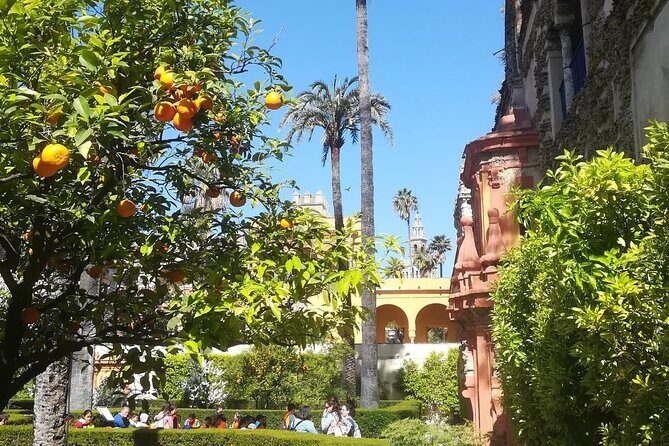
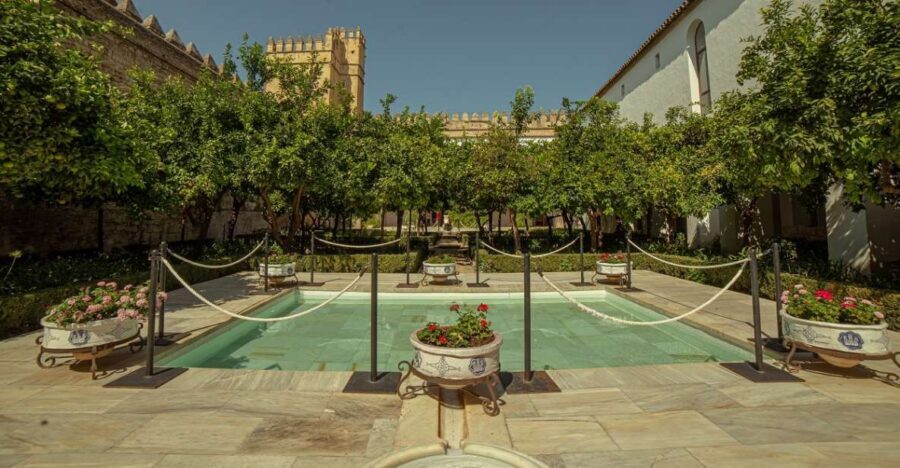
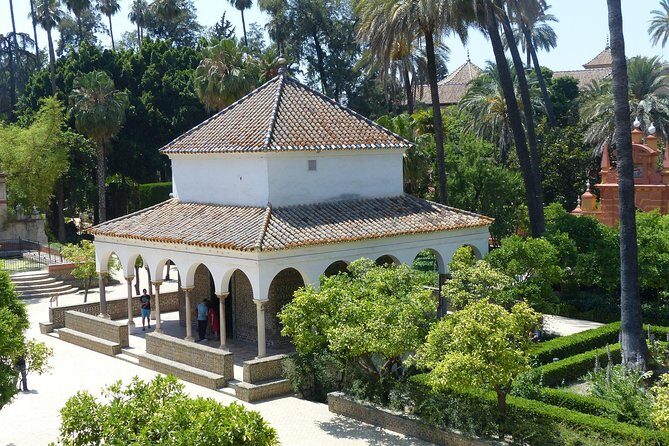
One more practical point: after the guided portion, you’re not just herded out. You have an independent stroll time that focuses on the gardens and ornamental patios. That’s where you get breathing space—shade, fountains, and the slower rhythm that makes the Alcázar feel different from other palaces.
Alcázar highlights you should look for: chambers, courtyards, gardens
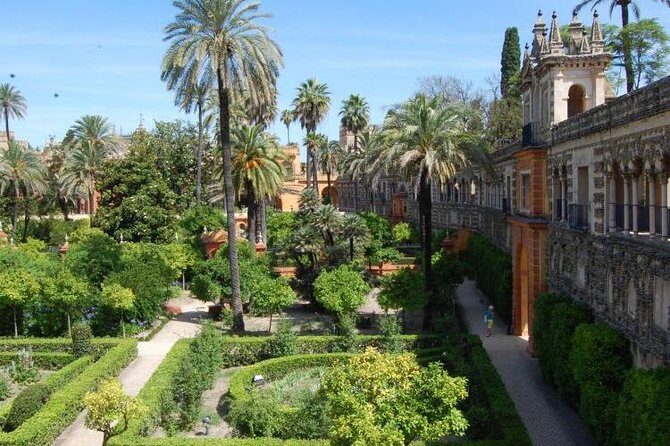
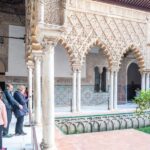
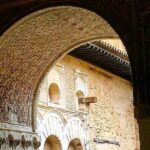
The Alcázar can look overwhelming from the outside. The guide’s job is to make it legible. As you move through the palaces and royal chambers, you’ll get pointers on the style shifts—Moorish, Gothic, and Renaissance—so you understand what you’re seeing rather than just snapping photos.
A key benefit of having a guide here is not speed, it’s interpretation. Courtyards repeat, arches and tiles repeat, and gardens repeat—so without context, you can lose track of what makes each space unique. With a guide, you’re more likely to notice details like how different eras responded to earlier design, and how power and ceremony shaped the layout of spaces used by royalty.
You’ll also get royal-context explanations. Since the palace is still used during royal visits, it carries an “active” feeling. Even if you never see the royals (most normal days you won’t), you’ll understand that these rooms aren’t historical props. They’re part of a tradition that’s still recognized.
And then there’s the ending rhythm: after the main palace sequence, you get time for the gardens and patios on your own. That’s smart because gardens reward a slower gaze. You can pause in shaded corners, walk at your own pace, and decide what to return to with fresh eyes.
From palace to Santa Cruz: Plaza del Triunfo, water passages, and the Giralda view
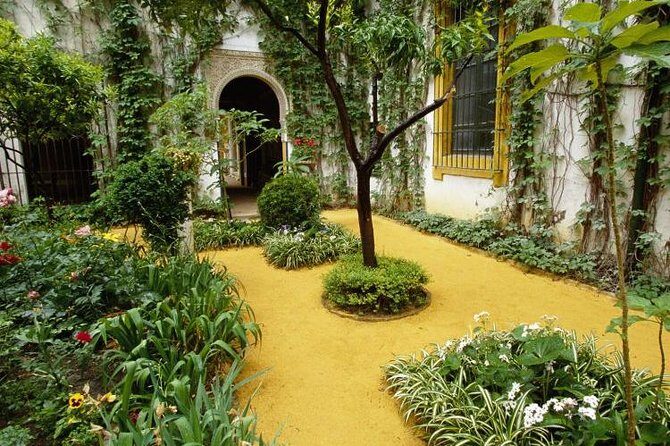
Once you exit the Alcázar, the tour transitions toward Santa Cruz. This part feels like a shift from imperial scale to human scale, and it’s one of the reasons the combo works so well.
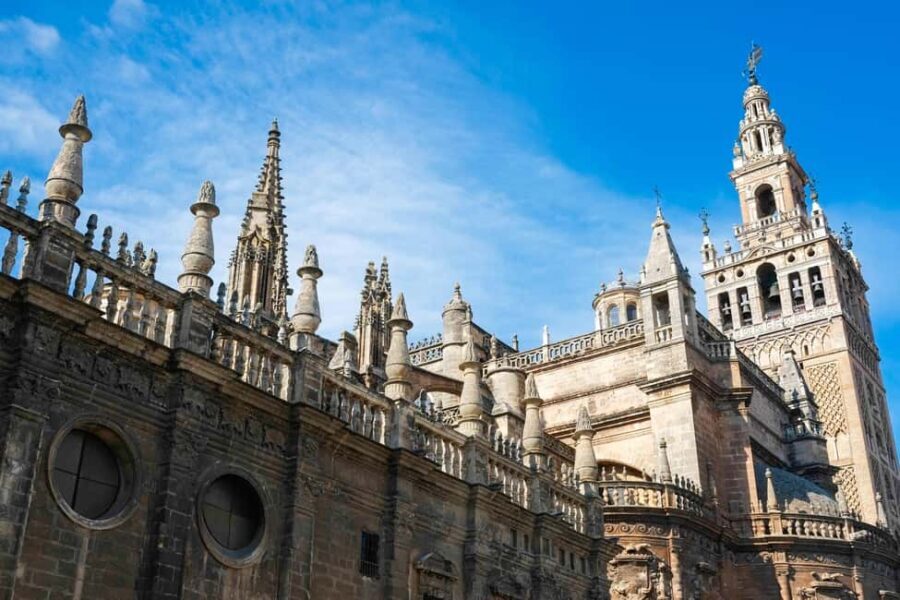
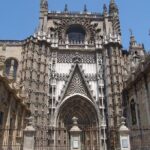
A standout in the route is the way the tour uses Plaza del Triunfo as a visual and directional anchor. The square is described as being at the Alcázar exit zone, linked to the Water Alley (Water Alley communicates with Plaza del Triunfo). You also get views of the Giralda from the same area, which is one of those skyline moments that helps you orient before you slip into tighter streets.
If you like history you can actually point at, this transition helps. You’re not just walking to another stop—you’re moving from the palace world into the neighborhood that absorbed and reshaped real lives over centuries.
Santa Cruz walking: orange plazas, cobbles, and the Jewish-quarter story
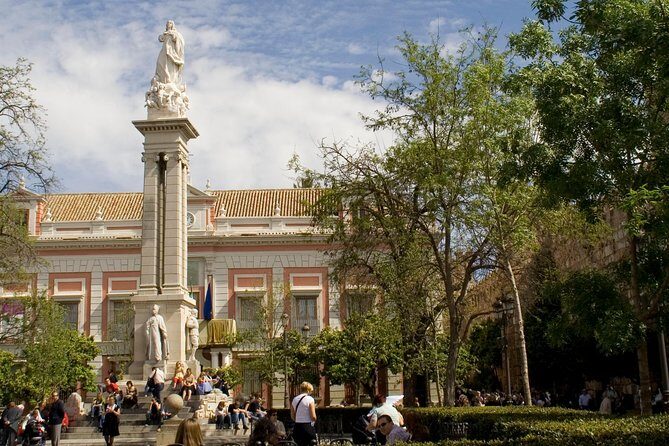
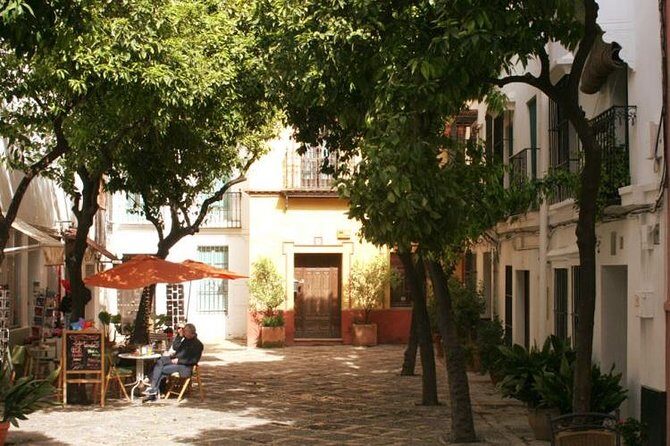
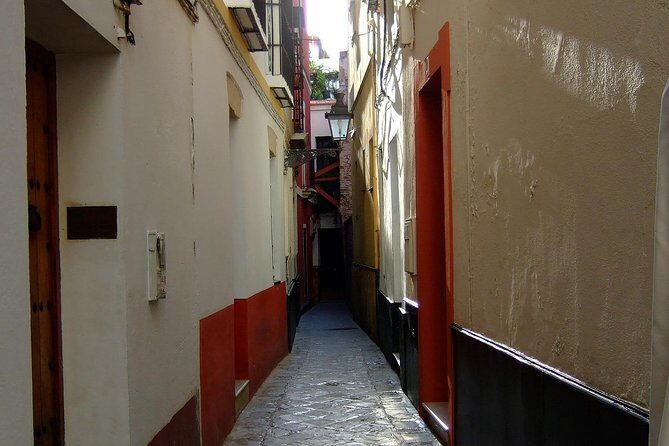
Santa Cruz is the heart of the tour’s second half. The old Jewish district is known for cobbled lanes, shady flowering courtyards, whitewashed houses, and plazas that smell faintly of orange. In other words: it’s the kind of place where a guided walk gives you structure, but the streets still do the talking.
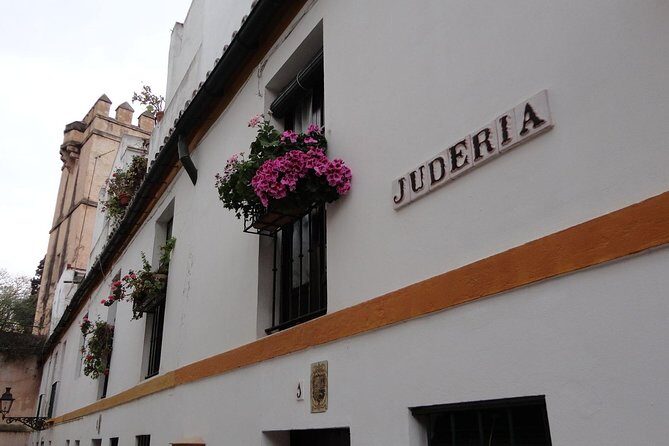
The tour shares the key historical arc: Seville’s Jewish people were confined to this district in 1248, and they remained there until they were expelled from Spain in 1492. That timeline matters because it reframes what you see. When you’re standing in a narrow passage or a small square, you’re not just admiring old stone—you’re standing in a space tied to forced community life, not voluntary tourism.
As you walk, you’ll stop at or pass by major highlights tied to local geography and stories:
- Plaza del Triunfo and its connections toward Santa Cruz
- Patio de Banderas (a courtyard highlight in the area)
- Plaza de Dona Elvira
- Calle Vida and Calle Susona
- A reference point connected to the Balcon de Rosina
Those references help you connect popular culture to place without losing sight of what the streets were actually for. Even if you’ve heard romantic versions of the neighborhood in other contexts, you’ll come away with a sharper sense of how the physical layout shaped day-to-day life.
Also, the tour doesn’t rush Santa Cruz like a checklist. You get enough time to wander the lanes and notice courtyards and small squares that are easy to miss when you’re moving fast or taking it all solo. That’s the “value” in the walking portion: you get the map in your head, then the neighborhood gets to impress you on its own.
Other walking tours we've reviewed in Seville



Short stops that add context: Venerables and Archivo General de Indias
Not every moment needs to be dramatic to be useful. Two quick stops help add layers that connect Seville’s palace power to its broader national importance.
There’s a brief stop at Hospital de los Venerables. It’s scheduled as a short visit, so think of it as a visual breather—an interlude that keeps your walk from becoming two straight hours of only palace and alleyways.
Then you’ll get time near Archivo General de Indias, with a Cristobal Colon reference in the area. The stop is short, but it matters if you like understanding why Seville showed up so strongly in Spain’s expansion story. Even a brief pointer here helps you see Seville as more than Andalusian postcard material.
These quick pauses are also practical. When you’re walking about 5 km in total, a couple of short stops keep your energy from draining too early.
Walking reality check: pace, group size, and hearing the guide
This is a guided walking tour with a clear pace. You should expect cobbled surfaces, some uneven steps, and tight lanes in Santa Cruz. Plan for that with shoes that don’t punish you on stone.
The tour is about 3 hours with around 5 km of walking. That’s manageable for many people, and the activity notes indicate it works for most travelers. Service animals are allowed, and you’re near public transportation for an easy start point.
Group size is capped at 30, which is helpful. But the bigger comfort factor is the audio support: whisper devices are included for groups of 8 or more. In a place like Santa Cruz, where streets can bounce sound around, that extra audio support can make a real difference in how much you actually hear and understand.
If you’re sensitive to crowds or want a slower, more reflective pace than a typical group tour, you might feel the schedule a bit. The upside is that you’re not locked into a full-day tour. You finish with time to keep exploring on your own after the guided segment ends near the Alcázar area.
Price and value: is $68 a fair deal for Alcázar + Santa Cruz?
At $68 for roughly 3 hours, the price is in the range of a “real guided day, not a cheap sampler.” Here’s what you’re getting for your money:
- A professional guide
- Skip-the-long-lines setup at the Alcázar (while the monument ticket is your responsibility)
- Guided time inside the Alcázar (about 1.5 hours)
- Guided walking through Santa Cruz plus key stop points
- Local taxes included
- Whisper audio devices for groups of 8+
- The tour promises skip-the-line convenience
The main value question is this: do you want help making sense of the Alcázar first, then getting oriented in Santa Cruz quickly? If yes, the guided format pays off. If you’re the type who prefers to roam without explanation, you might decide to DIY. But even then, the skip-the-line advantage can be worth paying for.
One caution to factor into your value decision: the included/excluded details are a little split around monument entry. The tour materials clearly indicate the Alcázar entrance ticket is at your own expense. So budget for that on top of the $68, and keep it in your planning so you’re not surprised mid-day.
Who should book this tour, and who should skip it?
This tour suits you if:
- You want the best “first-time combo” for Seville’s palace and its most iconic old neighborhood
- You like a guided storyline that connects architecture styles and historical context
- You’d rather pay for a guide than spend extra time hunting for the right streets, courtyards, and viewpoints
- You want a practical plan that leaves you free to continue later
I’d think twice if:
- Your schedule is extremely fragile and you can’t afford risk. There are reports of guides not showing up and difficulty contacting the operator in those cases.
- You’re arriving with a hard deadline and you don’t want to depend on timing that hinges on group logistics.
If your goal is maximum independence and you’re okay with waiting in lines, DIY can be cheaper. But if your priority is time efficiency at the Alcázar plus a structured Santa Cruz walk, this is the kind of tour that saves your brainpower.
Should you book this guided Alcázar and Santa Cruz walk?
If you want a smart orientation to Seville that combines palace grandeur with the lived-in feel of Santa Cruz, I’d book it. The pairing makes sense because the Alcázar is intense and detailed, and Santa Cruz gives you release afterward—shade, corners, and quiet courtyards.
Just go in with two practical habits. First, arrive at Plaza del Triunfo early enough to check in and settle your ticket plan. Second, keep your phone charged and handy, since the one real red flag here is service reliability when something goes wrong.
If you’re set on going no matter what, plan for the fact that the experience is listed as non-refundable and cannot be changed for any reason. For many people, that makes a guide tour a great choice. For a trip with uncertain logistics, it can be stressful.
If you want a clean, high-impact 3-hour Seville hit, this is a strong candidate—especially when you treat the Alcázar ticket as an extra line-item and use the guide to get your bearings fast.
FAQ
How long is the Alcázar and Santa Cruz walking tour?
It’s about 3 hours (approximately).
Where does the tour start?
The tour starts at Plaza del Triunfo, Pl. del Triunfo, Casco Antiguo, 41004 Sevilla, Spain.
Where does the tour end?
The tour ends back at the meeting point (Plaza del Triunfo).
Is the Alcázar ticket included in the tour price?
The Alcázar entrance ticket is listed as not included, and it’s at your own expense. The tour includes a skip-the-line setup.
About how much walking is involved?
You can expect about 5 km of walking.
What group size should I expect?
The tour has a maximum of 30 travelers.
Are whisper devices included?
Whisper devices are included in groups of 8 or more.
Is this experience refundable if I cancel?
No. It is non-refundable and cannot be changed for any reason.