REVIEW · SEVILLE
Alcazar Seville Tickets I Tour I Official Guide I Skip the Line
Book on Viator →Operated by CHECK-IN SEVILLA · Bookable on Viator
Seville’s Alcázar hits hard in the best way. I love the clear meeting point support that keeps you from wandering around Plaza del Triunfo, and I love that you get earphones plus an official Spanish guide who turns the building into an easy story to follow. One thing to consider: the explanations are in Spanish, so if you need English support, you may want to plan accordingly.
This is a guided visit built for how people actually experience Seville—high foot traffic, tight navigation, and lots to look at once you step inside. You’ll spend roughly 1 hour 10 minutes to 1 hour 20 minutes in the core visit, with an extra garden segment, plus you can keep lingering after the tour ends.
In This Review
- Key highlights at a glance
- Plaza del Triunfo is the perfect starting point for an Alcázar visit
- Meeting the guide: how this tour prevents the usual Seville scramble
- Before the doors: Cathedral and Giralda context you can actually use
- Entering the Real Alcázar through Lyon’s Door (and what to watch for)
- The palace highlights you’ll want to mentally file
- One notable gap: Cuarto Real Alto
- The garden time: Mercury pond, Neptune fountain, and a hydraulic organ
- How long it takes, and why pacing matters more than you think
- Price and value: what $57.62 buys you (and what it doesn’t)
- Guides like Santiago: what you should look for in the experience
- Who this Alcázar skip-the-line tour suits best
- Should you book this Real Alcázar guided ticket?
- FAQ
- How long is the Real Alcázar guided visit?
- Where do we meet for the tour, and what time does it start?
- What is included with the tour ticket?
- What is not included in the experience?
- Is the Cuarto Real Alto part of the visit?
- What if the gardens close due to weather?
- Is this tour refundable if I cancel?
Key highlights at a glance
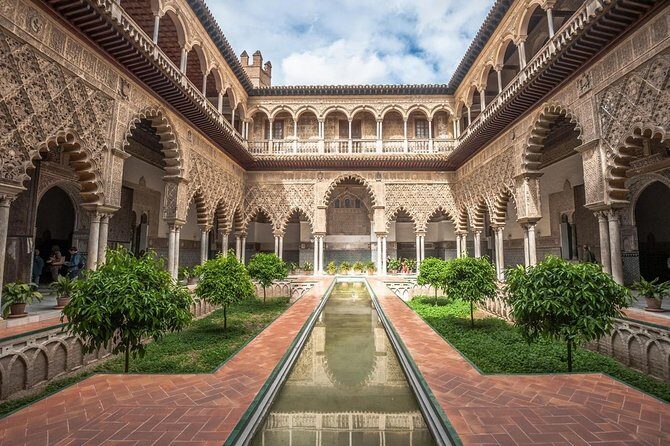
- Plaza del Triunfo setting: Real Alcázar, Seville Cathedral, and Archivo de Indias all tied to the UNESCO World Heritage listing (1987).
- Official guide + earphones: easier listening in a crowded monument.
- Big interior stops: Mudejar Palace (Peter One’s Palace), Gothic Palace, plus Mercury’s Pool.
- Garden segment: Mercury pond, Neptune fountain, and a hydraulic organ.
- Handled entry details: you go in through Lyon’s Door and exit via Patio de Banderas.
- Staying time after: you can continue inside or walk the gardens on your own once the guided part finishes.
Plaza del Triunfo is the perfect starting point for an Alcázar visit
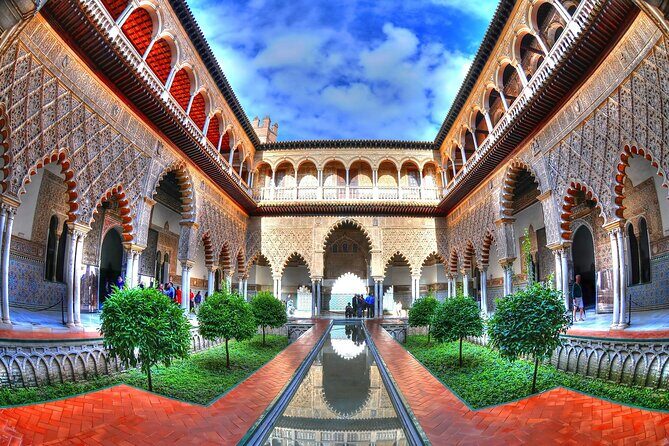
The Real Alcázar sits in one of Seville’s most concentrated heritage zones. You’re in Plaza del Triunfo, the same square that brings together the Real Alcázar, the Seville Cathedral, and the Archivo de Indias—all recognized as UNESCO World Heritage in 1987.
Why that matters for you: it means you’re not just visiting a single attraction. You’re standing in the middle of a whole historic complex, with sightlines and context all around you. Even before you enter, you’re already in the story: Spain’s power, Seville’s religious center, and the administrative records of empire.
It also makes logistics calmer. The meeting point is right there at Casa de la Provincia, Pl. del Triunfo 1 (Casco Antiguo). If you’ve ever arrived at a major Spanish monument and spent 15 minutes hunting for a vague check-in sign, you’ll appreciate that this plan is designed to keep the first hour from turning into a scavenger hunt.
More Real Alcázar of Seville at the Alcázar & Seville



Meeting the guide: how this tour prevents the usual Seville scramble
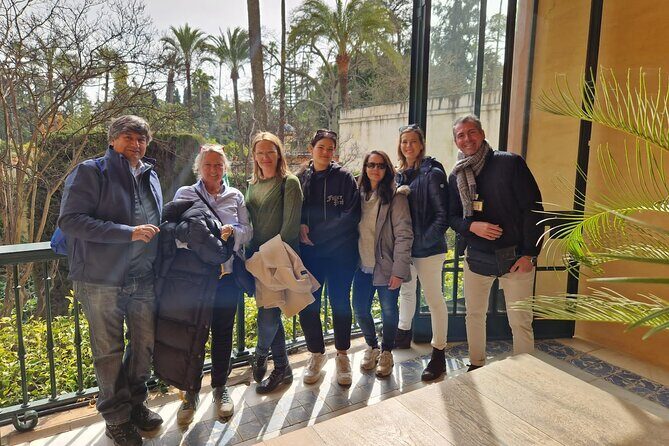
A guided Alcázar visit can be wonderful—or it can be frustrating if you can’t find the guide. This experience is built around the practical idea that agents work directly in the area, not from some distant office. The result is simple: your reservation info is sent to you with the details you need to identify the meeting point and your guide.
That’s not a small thing. Seville’s center is walkable, but it’s also busy. A group size capped at 28 travelers helps keep things moving, and the tour provides earphones, so you’re not forced to stand three inches from the guide’s shoulder just to catch a key detail.
Start time is 4:15 pm, which is smart for many schedules. Late afternoon often feels more human than midday. You’ll still be competing with daylight and crowds, but the pacing tends to feel better once the sun is lower.
Before the doors: Cathedral and Giralda context you can actually use
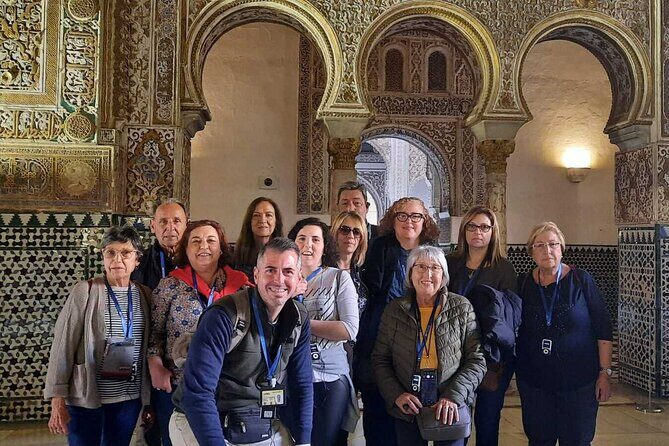
Right before entering the Alcázar, you’ll get a quick orientation. This isn’t a long lecture. It’s the kind of setup that helps your brain connect what you’re seeing with what came before.
On the way, you’ll hear about the Seville Cathedral and the Giralda—including when it was built, how it ended up as it is today, its architectural features, and which kings or major historical figures are buried there. The guide also sets the tone for the overall power-and-faith story of the city.
Then you shift back toward the Alcázar itself, with a brief intro on why it was constructed and how it changed uses over the years. The tour also touches on the idea that the building houses important documents, which gives you a reason to look beyond the decorative surfaces.
If you like understanding what you’re walking through, this warm-up is worth it. If you don’t, it still gives you a mental map, so the interior doesn’t feel like a blur of rooms and tiles.
Entering the Real Alcázar through Lyon’s Door (and what to watch for)
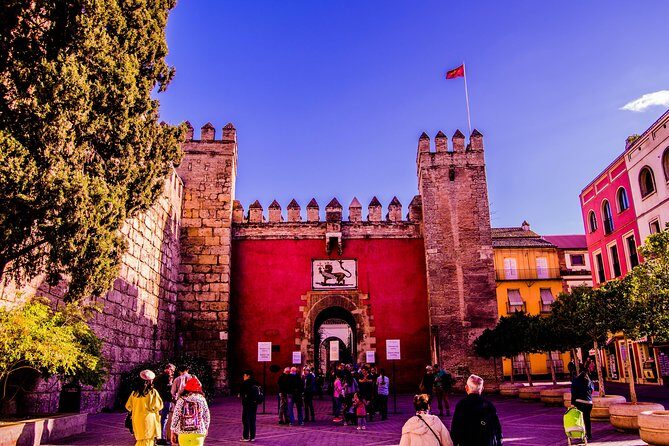
Your entrance is planned through Lyon’s Door, which is one of the ways this tour keeps things orderly once you’re inside. The guided route focuses on the interior palaces and key points you’ll want to see without constantly checking your phone.
Here are the stops that matter most as you plan your attention:
The palace highlights you’ll want to mentally file
You’ll move through a sequence that mixes rooms, style changes, and the sort of “wow” details you can’t get from photos alone.
- Justine Room and the Plaster Playground: expect a strong look at how the palace creates visual drama using materials and design.
- Admiral’s Room and Management House: this is where the building feels less like a movie set and more like a working center.
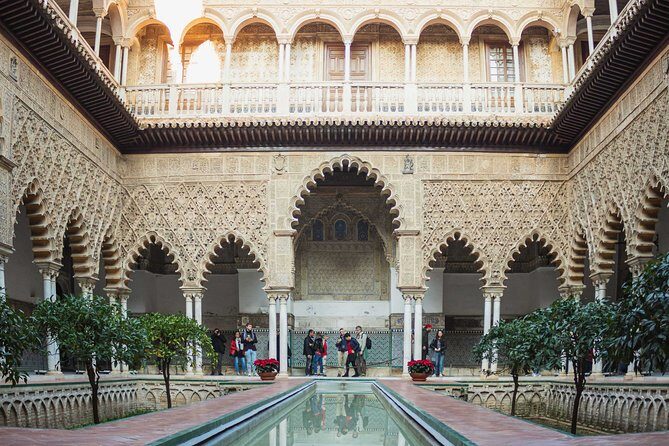
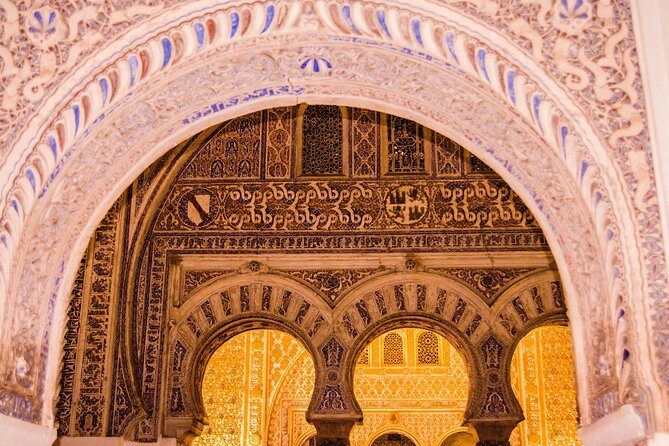
- Mudejar Palace (Peter One’s Palace): this is a major highlight. It’s where the palace’s identity feels clearest.
- Playground Maidens, Real Bedroom, Playground Dolls, and the Lounge of Ambassadors: these named spaces give you anchors, so you can remember what you saw instead of just thinking tile + ceiling + tile.
- Gothic Palace: another style shift, which helps you understand that the Alcázar wasn’t built in a single moment with one uniform taste.
- Mercury’s Pool: a visual pause point that’s easy to miss if you’re rushing. Here it’s part of the guided flow.
You’ll also see gardens as part of the interior sequence, then exit through Patio de Banderas.
More Skip-the-Line Tickets at the Alcázar & Seville




One notable gap: Cuarto Real Alto
The tour explicitly does not include the Cuarto Real Alto. If that’s on your must-see list, you’ll need to manage expectations or plan a separate visit for that portion. It doesn’t mean the tour is incomplete—it just means you should be clear about what you’re paying for.
The garden time: Mercury pond, Neptune fountain, and a hydraulic organ
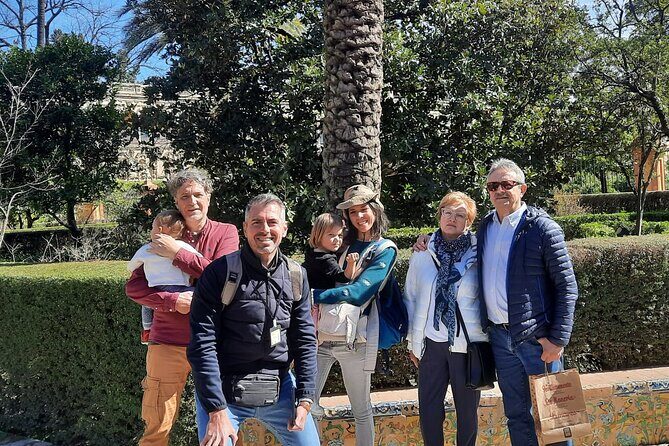
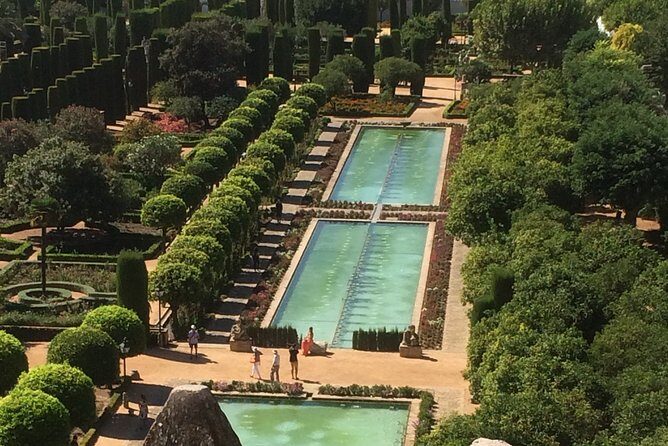
After the palace interiors, you’ll also cover a guided garden segment. This part is shorter—about 15 minutes—but it’s designed around recognizable features.
You’ll be guided through stops like:
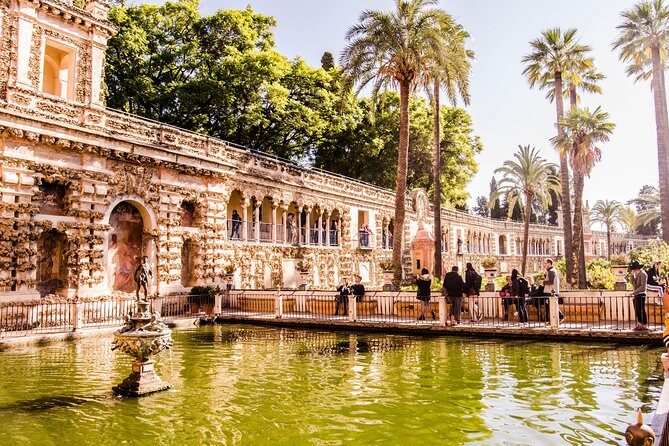
- Mercury pond
- Garden of the Ladies
- Neptune fountain
- Hydraulic organ
- Bedroom gazebo
- Grotesque Gallery
Even with limited time, these names help you orient yourself once you’re strolling on your own afterward. Gardens can feel endless, so a short guided track gives you a starting map.
And there’s an important practical bonus: after the official visit, you can stay inside or walk in the gardens for as long as you want. The monument also offers a small café, so you can take a breather without feeling you need to leave immediately to hunt down food.
One caution: garden closures can happen. The tour notes that the organization isn’t responsible for closures due to weather or direct orders from the Alcázar directorate. If you’re planning a trip around garden photography, keep your expectations flexible.
How long it takes, and why pacing matters more than you think
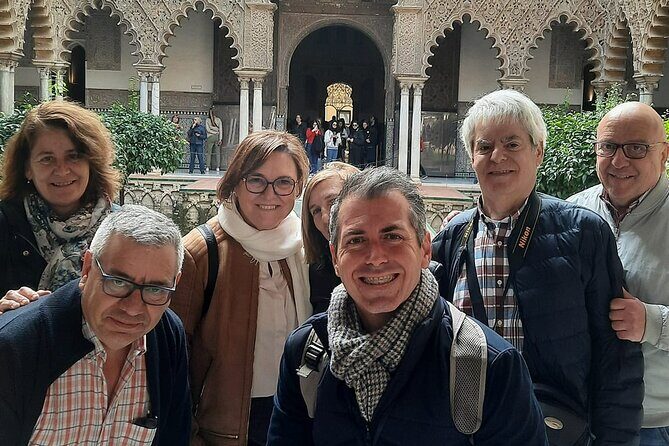
The core experience runs about 1 hour 10 minutes to 1 hour 20 minutes. That’s long enough to actually absorb palace rooms, but not so long that you’ll feel sick from standing.
Earphones help the pacing. When you’re in a major monument, you naturally end up farther away from the guide than you want. Listening through earphones means you can keep your eyes on details like arches, doorways, and ceiling motifs instead of constantly moving to hear.
There’s also a cap of 28 travelers, which tends to keep photo-taking realistic. Nobody loves waiting behind a wall of people. A small group makes it easier to move when the route changes.
Most travelers can participate, and service animals are allowed. If you have mobility concerns, the main thing is that you’re spending time on-site at a working historic complex, so plan for walking and time on your feet.
Price and value: what $57.62 buys you (and what it doesn’t)
At $57.62 per person, this isn’t the cheapest way to visit the Alcázar. But it’s also not a bare-bones ticket. The value comes from what’s included:
Included:
- Ticket to the Alcázar
- Earphones
- Official guide in Spanish
- Guided tour of the interior palaces and gardens
- All taxes and fees included
Not included:
- Snacks (and no drinks/breakfast/lunch/dinner)
- Transport to the monument or meeting point
- Cuarto Real Alto
Here’s how I’d judge the math for you: if you want the ticket handled, the listening system provided, and a route that points you to high-impact rooms (especially the Mudejar Palace area and the specific named stops), then the price feels fair for a guided entry. If you’d rather wander slowly with a self-guided audio app and you don’t care about organized timing, you might find a cheaper self-visit ticket elsewhere. But the moment you factor in the hassle of figuring out where to go and how to navigate the visit, guided value starts to look stronger.
Guides like Santiago: what you should look for in the experience
A key theme here is the guide’s ability to keep history understandable. The experience highlights strong performance from Santiago, with praise for clear explanations and attention to questions. The tone seems practical: not just facts, but help placing what you’re seeing into a bigger timeline.
You’ll also get useful after-tour support in the form of suggestions for what to do next in Seville—like places to eat and where to buy souvenirs. That’s the kind of help that actually saves time later, especially if it’s your first trip to the city.
If you’re traveling with kids, the guide approach is designed to keep children part of the experience rather than treating them like extra luggage. I like that, because the Alcázar can be visually overwhelming. A guide who can adjust to a mixed group makes the visit feel like it belongs to everyone.
Who this Alcázar skip-the-line tour suits best
I think this tour works especially well if you fit one of these patterns:
- You want Alcázar entry without the stress of meeting-point confusion.
- You prefer a guided route that helps you remember what you saw: named rooms, named garden stops, and a clear flow.
- You enjoy learning in a structured way, especially with a focus on the Mudejar Palace (Peter One’s Palace) and the palace’s different sections.
- You’re visiting at 4:15 pm and want a late-afternoon plan that doesn’t swallow the whole day.
It’s also a great option if you like being “finished” with the monument while still having energy left. Because you can stay longer after the guided portion, you get two speeds: guided once, then your time.
The main mismatch is language. Explanations are in Spanish. If you don’t read or listen comfortably in Spanish, you might feel left out during the core stops.
Should you book this Real Alcázar guided ticket?
If your priority is an organized Alcázar visit—ticket included, earphones, official guide, and a route that hits the palace rooms and garden features that people actually want to see—then yes, I’d book it. The price makes more sense once you see what’s included, especially the guided pacing and the earphones.
Book it with a couple of expectations set:
- You’ll miss Cuarto Real Alto.
- Gardens can face weather or directorate closures, so keep your plans flexible.
- The guide is in Spanish, so plan for your comfort level.
If those points fit your style, this is a solid way to experience the Real Alcázar without losing half your afternoon to logistics.
FAQ
How long is the Real Alcázar guided visit?
The total experience runs about 1 hour 10 minutes to 1 hour 20 minutes, with a shorter guided garden segment included as part of the overall experience.
Where do we meet for the tour, and what time does it start?
You meet at Casa de la Provincia, Pl. del Triunfo 1, Casco Antiguo, Sevilla, Spain. The start time listed is 4:15 pm.
What is included with the tour ticket?
You get the Alcázar ticket, earphones, an official Spanish guide, a guided visit of the interior palaces and the gardens, and all taxes and fees are included.
What is not included in the experience?
Snacks are not included, and the tour does not include transport to the monument or meeting point. Breakfast, lunch, and dinner are also not included.
Is the Cuarto Real Alto part of the visit?
No. The tour does not include the visit of the Cuarto Real Alto.
What if the gardens close due to weather?
Gardens may close due to weather or direct orders from the Alcázar directorate. The organization notes it isn’t responsible for those closures. Also, the experience requires good weather.
Is this tour refundable if I cancel?
This experience is non-refundable and cannot be changed for any reason. If you cancel or ask for an amendment, the amount you paid will not be refunded.